Toyota Land Cruiser 76 (J76) Tuning Guide 2026 — Body Kits, Wheels & Performance


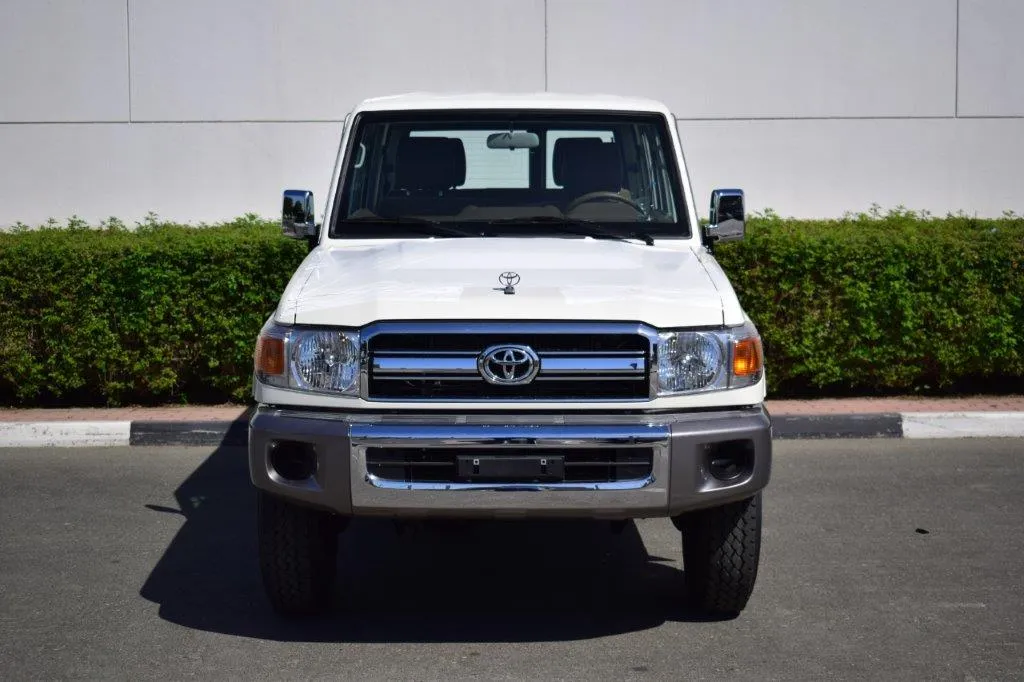
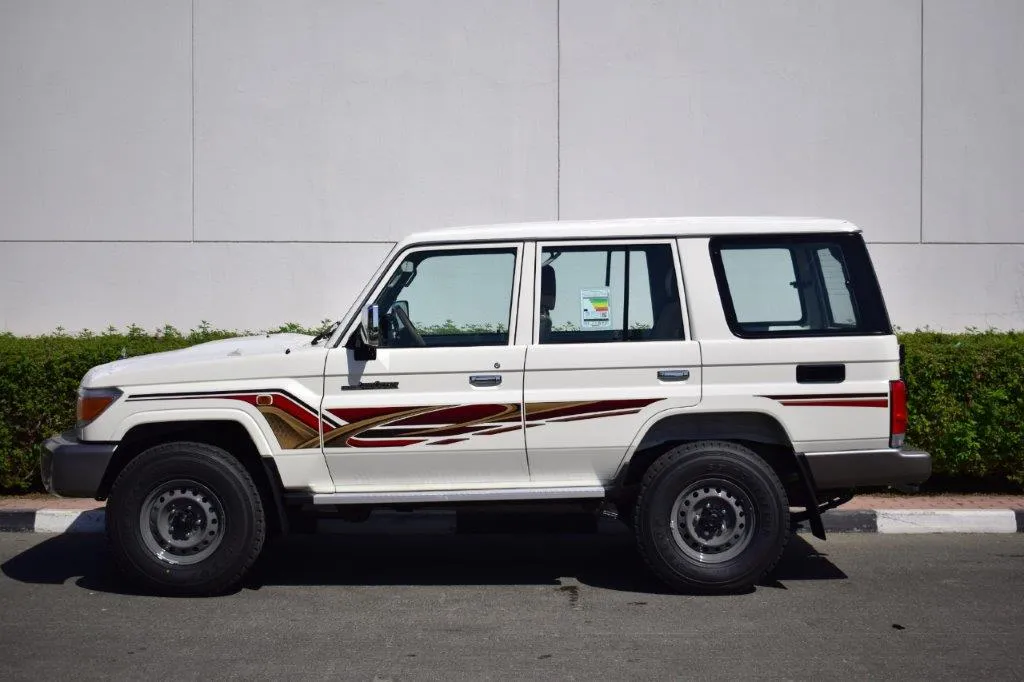
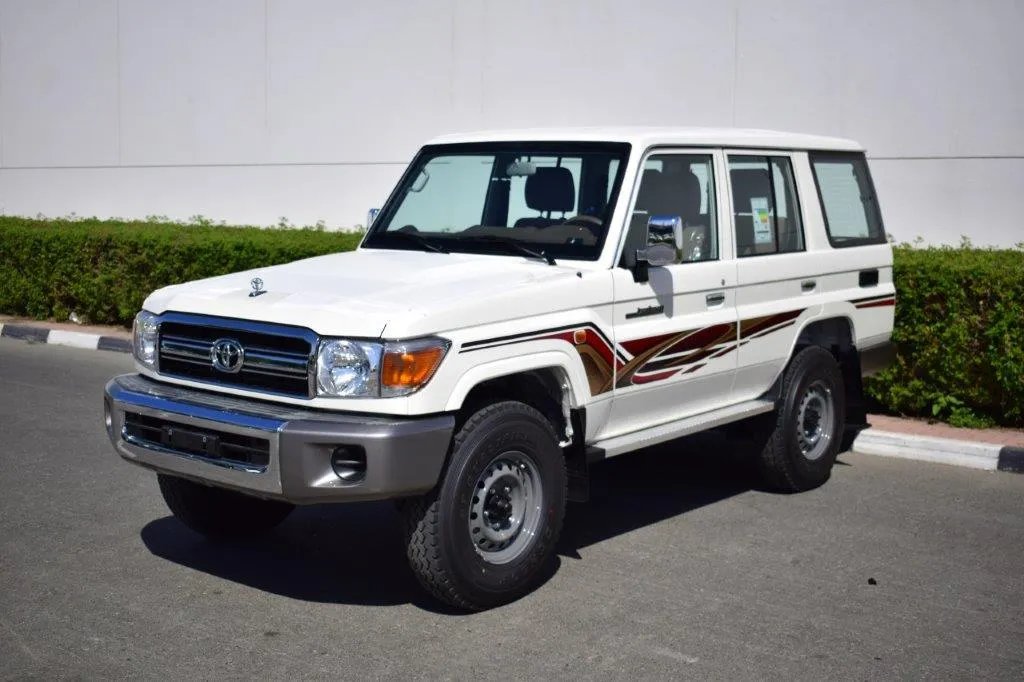
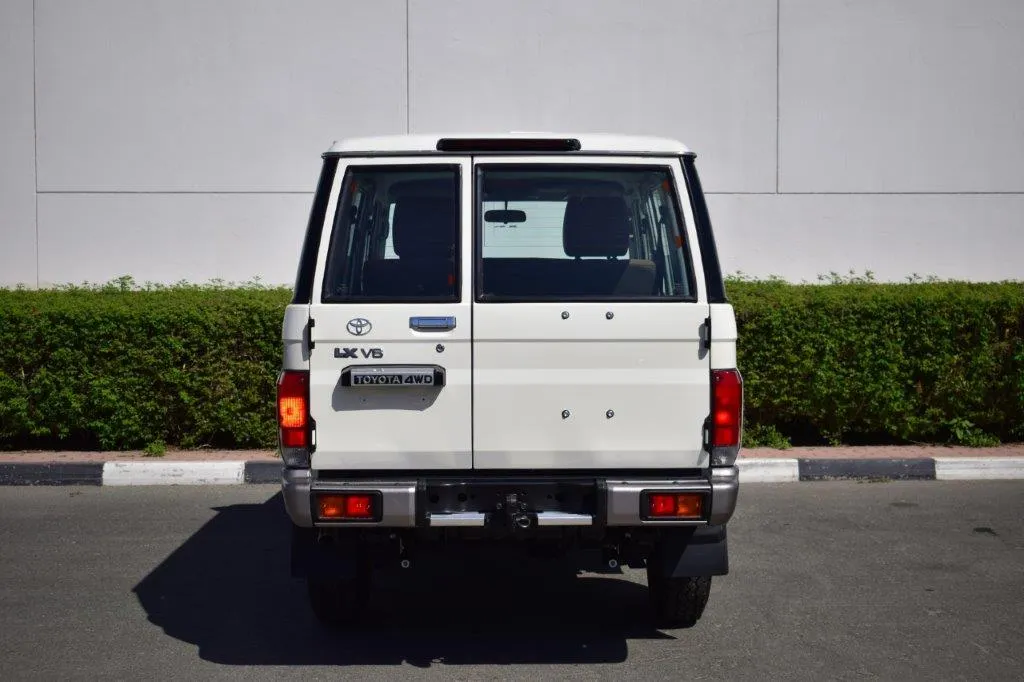
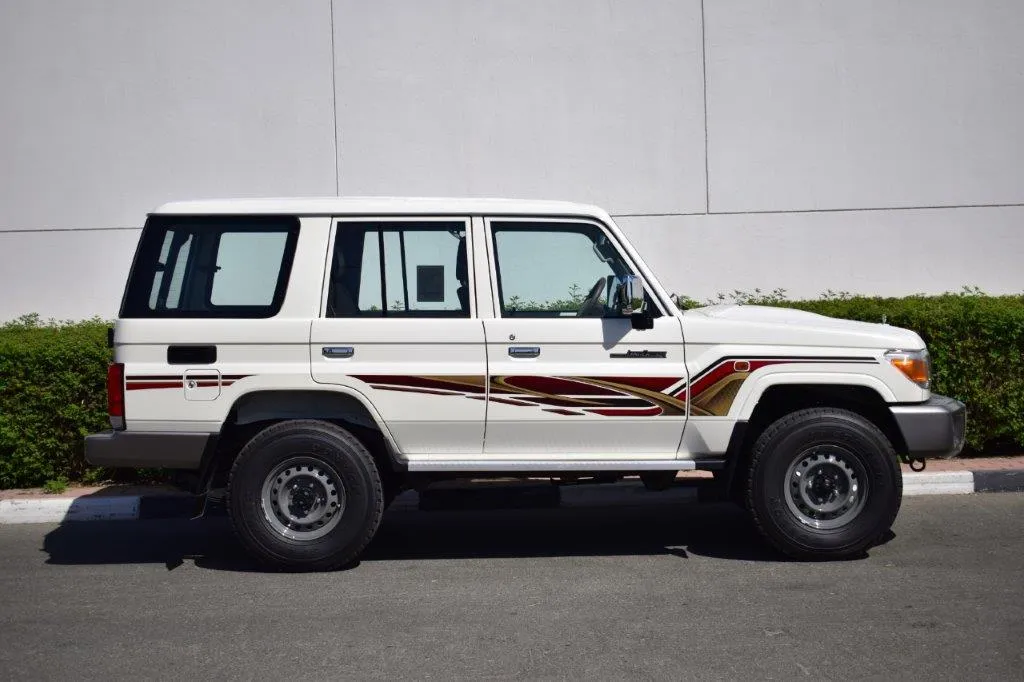
The Toyota Land Cruiser 76 (J76) is the five-door wagon member of the legendary 70-series family — a single, unbroken lineage of body-on-frame 4x4s in continuous production since 1984 and still rolling off Toyota's Araco-assembled lines in 2026. The LC76 is the only remaining mass-produced new station-wagon in the world built on a separate steel ladder chassis with live axles at both ends, a transfer case with genuine low-range reduction, and no monocoque compromises whatsoever. It occupies a unique niche in the global 4x4 landscape: the preferred family-transport configuration of the 70-series, widely used by Australian outback operators, Middle Eastern private buyers and NGO fleets across Africa. This guide covers every meaningful upgrade available for the VDJ76 V8 diesel, GRJ76 V6 petrol and long-serving HZJ76 inline-six diesel — suspension, armour, recovery, wheels and engine work — and explains what actually survives in the field.
Specifications — Toyota Land Cruiser 76 (J76 wagon, 2007–present)
Body Armour, Bull Bars & 4x4 Kits for the Land Cruiser 76
The J76 wagon's aftermarket is utterly unlike every other vehicle in the Hodoor catalogue. There are no Wald, Mansory or ABT programmes for the LC76 — and there never will be. What exists instead is a deep, purposeful, overland-focused ecosystem centred on Australia, supported by Japanese, South African and UAE specialists. The following five suppliers define the global LC76 wagon build landscape in 2026.
ARB 4x4 Accessories — Deluxe Bull Bar, Summit Tray & Air Locker
ARB of Melbourne is the largest 4x4 accessories manufacturer in the world and the single most recognisable aftermarket brand fitted to an LC76. The ARB Deluxe Bull Bar for the VDJ76 wagon is engineered and airbag-compatible, accepts a Warn 9.5 XP or ARB-branded winch up to 12,000 lb, and provides full headlight and radiator protection against kangaroo, camel or cattle strike at highway speed. ARB's Air Locker pneumatic differential lockers remain the gold-standard upgrade for LC76 buyers who want reliable low-range traction beyond the factory front locker — fitted to the rear axle, the VDJ76 becomes mechanically equivalent to a purpose-built expedition wagon. ARB also supplies rear-bar wheel carriers, drawer systems tailored to the wagon's longer cargo area, under-vehicle bash plates, rock sliders, dual-battery kits and the full Old Man Emu suspension catalogue below.
Old Man Emu (OME) / BP-51 — Suspension & GVM Upgrade
Old Man Emu is ARB's in-house suspension brand and the definitive LC76 ride-quality upgrade. The standard OME heavy-duty kit for the VDJ76 comprises Nitrocharger Sport twin-tube shocks (or the premium remote-reservoir OME BP-51 bypass dampers), heavier-rate front coils and heavier rear coils matched to the expected permanent load — the wagon is coil-sprung at both ends so the spring-rate conversation is simpler than on the leaf-sprung 79 pickup. A typical OME 2-inch lift on a touring-spec VDJ76 raises GVM from 3,060 kg to 3,500 kg (via engineering-certified GVM-upgrade kit), adds roughly 440 kg of payload capacity and transforms the factory truck-stiff ride into something usable as a daily driver. OME's BP-51 remote-reservoir damper is the reference against which every other LC76 suspension vendor is measured — adjustable compression and rebound, aluminium body with separated oil and gas chambers, and a service life of 150,000 km before rebuild.
TJM 4x4 Megastore — XGS Suspension, T3 Bull Bar & Snorkel
TJM (Brisbane) is ARB's long-standing Australian competitor and offers a parallel but meaningfully differentiated ecosystem. The TJM T3 Outback steel bull bar is lighter than the comparable ARB unit by roughly 8 kg through a more aggressive tube-section design; TJM XGS foam-cell shocks are a distinct alternative to Nitrocharger Sport with a slightly firmer damping curve preferred by Kimberley and Pilbara operators. TJM's snorkel programme — injection-moulded high-grade polymer with a closed-cell foam air-ram — is the preferred choice among West Australian cattle stations. TJM also supplies the complete LC76 recovery gear range: winches, recovery tracks, soft shackles and earth anchors.
Ironman 4x4 — Budget-Conscious Complete Kits
Ironman 4x4 offers a slightly more accessible price point than ARB and TJM while covering every product category — suspension, bull bars, rear bars, tyre carriers, roof racks, drawer systems, awnings. Ironman's Foam Cell Pro suspension kit for the LC76 is the entry-level preferred package for first-time overland buyers outside Australia who want a proven Australian-engineered kit without ARB's price premium. Ironman's Commercial Deluxe bull bar is a particularly strong value pick: full tube wrap, winch-compatible, ADR-approved. Ironman also manufactures the Bluetooth-controlled Ironman Tuner diesel chip covered in the Performance section.
Safari Snorkel, Bilstein 4600, Harrop ELocker & Lambert's Steering
Beyond the four full-range suppliers above, several specialist vendors own specific product niches on the LC76. Safari Snorkel (now owned by ARB) is the original-equipment raised-air-intake brand and remains the benchmark for deep-water-crossing certification. Bilstein 4600 series monotube gas shocks are the preferred factory-ride-height shock absorber for owners who want OEM-equivalent geometry with better thermal stability than factory twin-tubes. Harrop ELocker is the Australian-made electronically-actuated rear differential locker preferred over ARB Air Locker by owners who want to eliminate the on-board compressor. Lambert's Steering Services (Brisbane) manufactures the heavy-duty steering-box rebuild that every serious LC76 expedition build eventually needs after 200,000 km of outback work. Every LC76 builds to a slightly different combination of these specialist parts depending on intended use and regional norms.
ARB Deluxe Bull Bar, Old Man Emu BP-51 suspension, Harrop ELocker, Safari Snorkel, TJM, Ironman 4x4, Bilstein — all authentic, engineering-certified parts shipped direct from Australia and the Middle East. We ship fully-kitted VDJ76 wagon builds to the UAE, Saudi Arabia, the EU, Central Asia, East Africa and Latin America. VIN-verified fitment before every order.
Contact: [email protected]Wheels & Tyres — 16 to 18 Inches, 6×139.7
The LC76 uses Toyota's classic 6×139.7 (6×5.5 inch) bolt pattern with a 106-mm hub-centric bore. Factory fitment is 16-inch steel on the workhorse trim and 17-inch alloy on the GXL. Unlike luxury SUV tuning, the LC76 wheel discussion is dominated by tyre choice and rim strength rather than aesthetics. Recommended wheel families:
- Method Race Wheels MR305 NV / MR701 Trail — Forged or pressure-cast aluminium off-road wheels manufactured in California. The MR305 NV in 17×8.5 ET0 is the US/ME preferred fitment; the MR701 is the lighter variant. Both accept 33" or 35" all-terrain tyres without arch modification on a standard 2-inch-lift LC76 wagon.
- OME / ARB 17-inch Steel & Alloy — The most overland-correct wheel for an LC76 is still a heavy-duty 16 or 17-inch steel rim: bendable in a rock strike, weldable in any country with a stick welder, accepting tyre pressures down to 10 psi for sand work. ARB's black-coated steels are the outback wagon standard.
- Black Rhino Primm / Arsenal — 17 and 18-inch alloy with deep-dish military-style design. Preferred by UAE and Saudi buyers for the aggressive appearance with desert-compatible load ratings.
- Fuel Off-Road Assault / Vector — For owners who want a more show-oriented appearance. Available 17–20 inch; we do not recommend 20-inch on an LC76 used off-road due to sidewall height loss.
- Rhino-Rack Pioneer Platform wheel-carrier — Not a wheel itself but the roof-mounted spare tyre carrier that most serious LC76 wagon builds fit alongside their wheel choice.
Tyre recommendations: the reference all-terrain for the LC76 is the Cooper Discoverer S/T Maxx or Maxxis RAZR AT-811 in 265/70 R17 (standard) or 285/70 R17 (2-inch lift). For pure sand work in the Arabian Peninsula the BFGoodrich All-Terrain T/A KO2 in 285/75 R16 is the long-established default. Expedition-focused wagon builds running rural Africa favour the Michelin XZL or Continental MPT-81 military-grade tyres for their sidewall puncture resistance.
Performance — 1VD-FTV V8 Diesel & 1GR-FE V6 Petrol Upgrades
The LC76 performance conversation is fundamentally different from every luxury SUV in the catalogue. Nobody chips a Land Cruiser 76 to drop tenths at a drag strip — the goal is real-world torque for hauling 3.5-tonne rigs up corrugated tracks, and for most operators maintaining factory-like reliability across 500,000+ km service lives matters far more than peak figures. With that caveat, meaningful gains are available.
VDJ76 1VD-FTV Stage 1 — ECU Remap + 3-Inch Exhaust (~245 hp / 550 Nm)
A typical Stage 1 build on the twin-turbo 1VD-FTV V8 diesel (2016+ wagons) or single-turbo 1VD-FTV (2007–2016) comprises an Ironman Tuner, Roo Systems or DPChip ECU remap, a free-flow 3-inch stainless turbo-back exhaust (Manta or Beaudesert), and optional EGR-blanking kit where legal. Realistic output rises from 205 hp / 430 Nm to approximately 245 hp / 550 Nm, with the vast majority of gains felt as improved mid-range pull in 3rd and 4th gears — precisely the gears an overland LC76 spends its life in. Fuel economy typically improves by 0.5–1.0 L/100 km under load. Stage 1 does not require transmission upgrade or clutch replacement and preserves factory DPF operation on 2016+ twin-turbo cars.
VDJ76 Stage 2 — Intercooler + High-Flow Turbos (~285 hp / 660 Nm)
Beyond Stage 1, a meaningful Stage 2 on the 1VD-FTV combines a larger front-mount intercooler (HPD or Cross Country Performance), a fuel-pump upgrade, and — on single-turbo pre-2016 wagons — a swap to the twin-turbo OEM setup or an aftermarket Garrett GTB2060VK. Output rises to approximately 285 hp / 660 Nm. At this point the factory clutch becomes the weak link; a heavy-duty Exedy or Mantic clutch upgrade is mandatory. Stage 2 is the realistic upper limit for a 1VD-FTV wagon expected to do 500,000 km of expedition work without rebuild.
GRJ76 1GR-FE Petrol — Intake, Exhaust, Harrop Supercharger (~340 hp)
On the 1GR-FE 4.0-litre V6 petrol (primarily Middle East and African markets), Stage 1 bolt-on intake and exhaust yields approximately 250 hp / 395 Nm from the factory 228 hp. The more interesting route is the Harrop TVS1900 supercharger kit for the 1GR-FE — a fully engineered intercooled positive-displacement supercharger producing approximately 340 hp / 490 Nm with factory-calibrated driveability and factory warranty retention in markets where Harrop has OEM-approved distribution. The Harrop kit is the definitive answer for GRJ76 wagon owners who want genuinely fast highway performance without sacrificing reliability.
HZJ76 1HZ Legacy — Turbo & Injection Work
The 1HZ 4.2-litre naturally-aspirated diesel inline-six (129 hp / 285 Nm factory) remains in production for African markets specifically because it is indestructible and repairable in the field. Meaningful Stage 1 gains come from a DTS Denco turbocharger retrofit kit with an uprated injection pump and a 3-inch exhaust — output rises to approximately 170 hp / 420 Nm. This is the only mainstream performance path for HZJ76 owners and it is the most widely deployed engine modification in East African 70-series fleets.
Interior & Cabin Upgrades
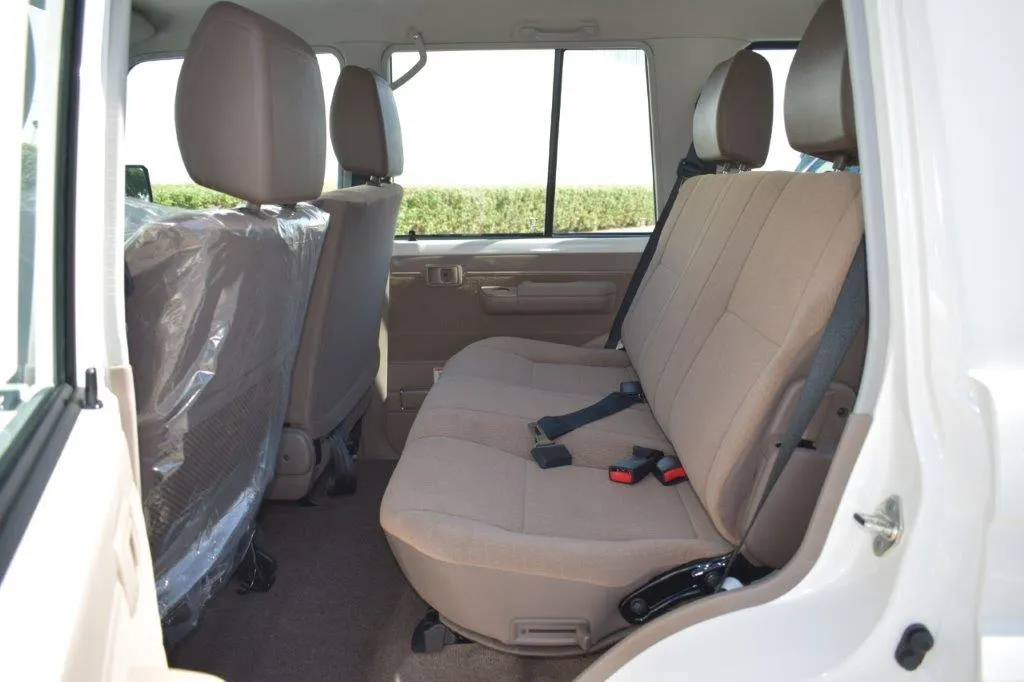
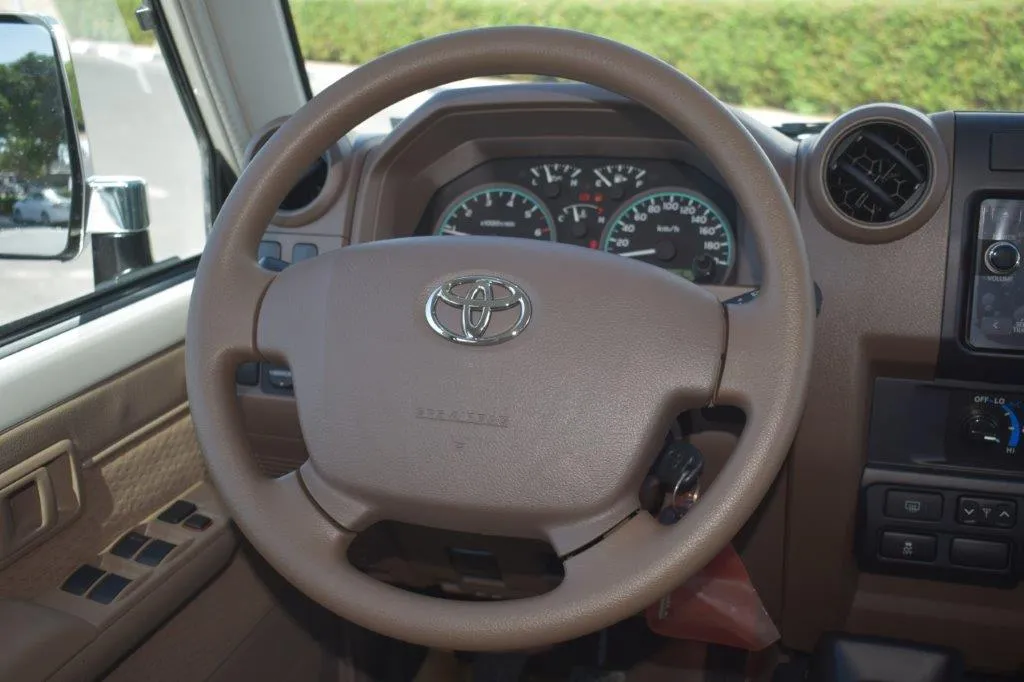
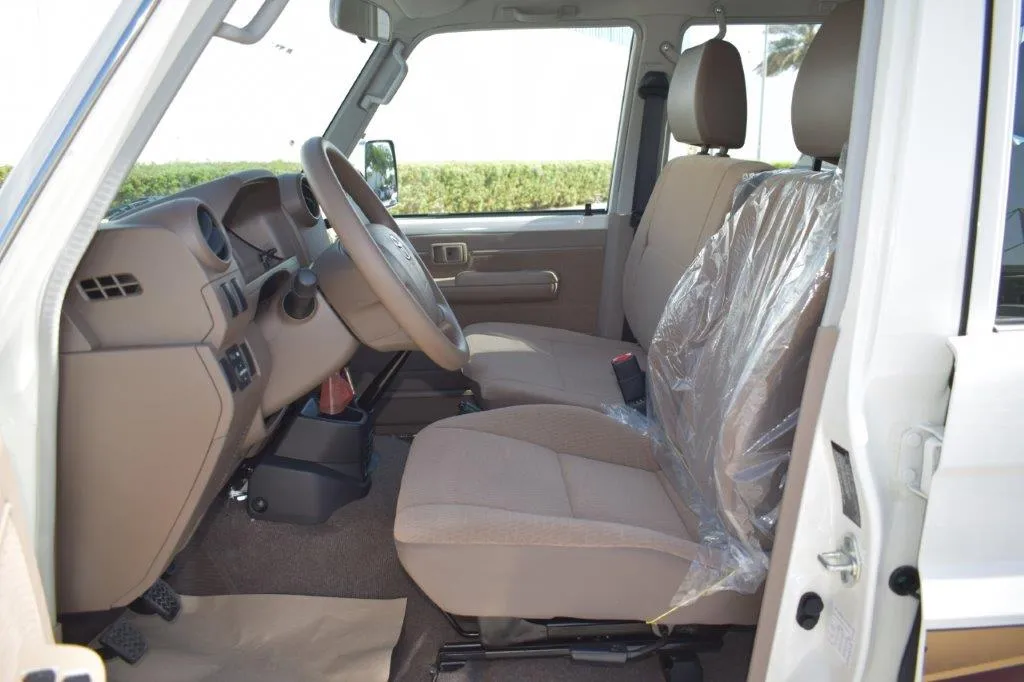
The LC76 cabin is spartan by 2026 standards — it is, in practical terms, a 1999 interior with minor updates. This matters because most serious LC76 wagon builds invest heavily in making the cabin liveable across 12-hour driving days.
- Outback Accessories / MSA 4X4 drawer system — Twin-drawer aluminium storage system tailored to the wagon's longer cargo area, with fridge slide, recovery-gear tray and work surface. The defining accessory for Australian touring wagons.
- REDARC BCDC1240D dual-battery DC-DC charger — Smart dual-battery management to run fridges, lighting, inverter loads and winch from an auxiliary AGM battery without impacting starter reliability.
- Kenwood / Alpine head unit with Apple CarPlay retrofit — The factory LC76 head unit is primitive; a 9-inch Alpine or Kenwood retrofit with reverse camera and GPS transforms the cabin without chassis modification.
- Black Duck Canvas seat covers — Heavy-duty canvas seat covers are the overland standard; they outlast the factory cloth by a factor of five and survive dust, mud, diesel and station-hand abuse.
- Rhino-Rack Pioneer roof platform — Full-length aluminium roof platform for rooftop tent, jerry-can mounts, Maxtrax recovery boards and awning. Transforms the wagon into a self-contained expedition vehicle.
Tuning the LC76 by Region — Australia, Middle East & Africa
No other vehicle in the global 4x4 market is built to such radically different specifications on the same chassis as the Toyota Land Cruiser 76 wagon. The VDJ76 sold in Sydney, Dubai and Nairobi shares the same block, gearbox and ladder frame — but the finished vehicles that leave the dealership have almost nothing else in common. Understanding these three dominant regional builds is essential because parts availability, warranty terms and even factory trim options differ by market.
Australian spec (the outback overlander) is the world's most technically developed LC76 configuration. A typical Australian VDJ76 GXL leaves a Toyota dealership and enters an ARB or TJM workshop the same week, emerging with: 2-inch OME BP-51 suspension with 3,500 kg GVM upgrade, ARB Deluxe Bull Bar with Warn winch, Safari snorkel, long-range 180 L dual tank, MSA twin-drawer system, REDARC dual-battery, 40 L Waeco fridge slide, 60 L water tank, 33-inch Cooper S/T Maxx on steel wheels, Rhino-Rack Pioneer roof platform with awning, UHF radio, and Ironman Tuner ECU remap. Total build time two weeks; total cost roughly equal to the base vehicle. This is the benchmark working wagon in the world, and it is why the LC76 consistently tops second-hand Australian 4x4 values after 10+ years of ownership.
Middle East spec (the chrome build) represents an entirely different priority set. Gulf and Saudi buyers overwhelmingly choose VDJ76 or GRJ76 wagons and specify chrome bull bars, polished alloy 17-inch or 18-inch wheels, BF Goodrich or Yokohama sand-specific tyres (typically 35-inch on serious dune-running builds), deeply tinted windows, uprated dual-climate air-conditioning with auxiliary evaporators for the rear, heavy sound-damping for desert highway cruising at 140 km/h, and modified AC compressor speeds to cope with 48°C summer ambient. The cabin investment leans toward carbon or burr-walnut dash retrofits, quilted leather seat retrimming (Nappa from Dubai specialists), premium Focal or Alpine audio, and roof-mounted LED light bars. Recovery gear is less prominent — in the Gulf the LC76 is a touring and prestige wagon first, a recovery vehicle second.
African spec (the NGO / safari build) is the most purposeful and least decorative of the three. LC76 wagons — typically the older HZJ76 with the indestructible 1HZ naturally-aspirated diesel still in production specifically for this market — operate as UN OCHA, MSF, WFP and NGO fleet vehicles, mining-site supervisor transport, and commercial safari guides across Kenya, Tanzania, Namibia and Botswana. The defining components are: 180–280 L long-range fuel tank, roof-mounted sand channels and spare-tyre carrier, dual-spare configuration, roof-mounted satellite and HF radio mount, protective grille and rock-sliders, Toughdog or West Coast suspension matched to standardised payload, alloy box body conversions for equipment transport, and — crucially — a complete first-aid and recovery rack bolted to the rear door. No chrome, no polished wheels, minimal audio — everything in the spec is chosen to survive 10-year field deployment in Mali, Somalia, the DRC or the Okavango. The African LC76 is how most of the world outside Australia and the Gulf will ever see this vehicle work.
Frequently Asked Questions
What platform does the Toyota Land Cruiser 76 use?
The LC76 wagon uses Toyota's J70-series body-on-frame ladder chassis — a dedicated 4x4 architecture in continuous production since 1984. The LC76 is not a unibody vehicle and has no relationship to BMW's CLAR cluster architecture or any other car-derived platform. The J70's defining features are a separate steel ladder frame, live front and rear axles (both coil-sprung on the wagon body), part-time 4WD with manually locking front hubs, a VF1A transfer case with genuine low-range reduction, and a factory front differential lock on GXL trims. This is the last mass-produced new 4x4 station-wagon sold anywhere in the world that retains all these traditional features simultaneously — which is why working operators from Australian cattle stations to UN peacekeeping missions still specify it in 2026.
VDJ76 V8 diesel, GRJ76 V6 petrol or HZJ76 inline-six — which is the best base?
For an overland wagon build the 1VD-FTV V8 diesel (VDJ76) is the clear choice: 430 Nm from 1,200 rpm, 900 km+ range on the dual 180 L Australian tank, superior low-speed engine braking on descents, and an aftermarket catalogue ten times larger than any other LC76 engine. The 1GR-FE 4.0L petrol V6 (GRJ76) is smoother, quieter, cheaper to buy in ME and African markets, and responds exceptionally well to the Harrop TVS1900 supercharger kit — but fuel economy is roughly 30% worse at typical overland loads. The 1HZ 4.2L diesel inline-six (HZJ76) is slower and less refined than either, but is widely considered the most indestructible engine Toyota has ever built and remains in production specifically because it can be rebuilt in any East African workshop with basic tools. Choose VDJ76 for most buyers; GRJ76 for Gulf highway duty; HZJ76 for deep-Africa fleet deployment.
Can I fit 35-inch tyres on an LC76 wagon without arch modification?
On a 2-inch OME or TJM lift, 33-inch tyres (285/70 R17 or 33×10.5 R17) fit cleanly without cutting or trimming on the LC76 wagon. 35-inch tyres (315/70 R17 or 35×12.5 R17) require a 3-inch lift and typically minor plastic arch-liner trimming on full-lock articulation, plus longer bump stops and extended brake lines. A 35-inch conversion also requires a re-geared differential (4.88:1 crown-and-pinion replacing the factory 4.30:1) to restore factory-specified acceleration and keep the 5-speed gearbox in its comfort band. We recommend 33-inch as the optimal size for most LC76 builds; 35-inch is reserved for Gulf dune-running or dedicated rock-crawling configurations.
Does Hodoor ship ARB, OME and other Australian LC76 parts worldwide?
Yes — Hodoor sources LC76 parts direct from authorised distributors in Melbourne, Brisbane, Dubai and Dar es Salaam. ARB, Old Man Emu, BP-51, TJM, Ironman 4x4, Safari Snorkel, Harrop, Bilstein, Method Race Wheels, Rhino-Rack and Cooper Tires are all available with international shipping. Typical Australia-origin parts arrive at EU destinations within 18–22 business days and at Middle East / Central Asia destinations within 14–18 business days. All shipments include HS-code classification, English-language installation manuals, engineering-certification paperwork where applicable (GVM upgrade, ADR-approved bull bars) and tracking. Contact [email protected] with your VIN, engine variant (VDJ76 / GRJ76 / HZJ76), model year and intended use profile (outback touring, Gulf highway, African fleet) for a complete specification quotation including shipping and duty guidance.
ARB Deluxe Bull Bar & Air Locker, OME BP-51 suspension with GVM upgrade, Harrop ELocker, Safari Snorkel, TJM, Ironman 4x4, Bilstein 4600, Method Race Wheels, Rhino-Rack Pioneer roof platform. Stage 1 & Stage 2 ECU and exhaust for the 1VD-FTV V8 diesel — up to 285 hp / 660 Nm. Harrop TVS1900 supercharger for GRJ76 V6 petrol — 340 hp. Worldwide shipping, VDJ76/GRJ76/HZJ76 VIN-verified fitment, engineering certification included.
Contact us: [email protected]