



Lexus RX Tuning Guide 2026 — Body Kits, Wheels & Performance Upgrades


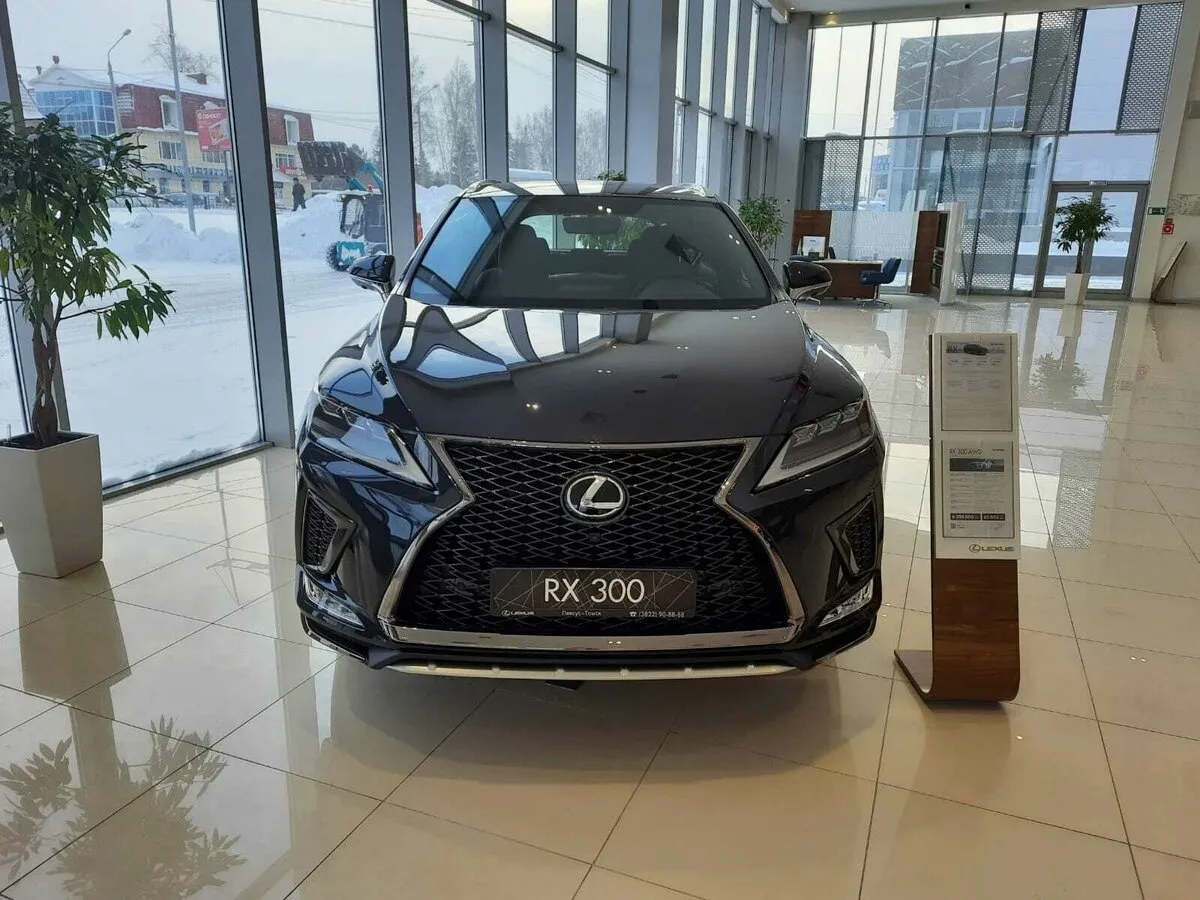
The Lexus RX has defined the luxury midsize SUV segment since 1998. The current generation (AL20/AL30) pairs Toyota's GA-K platform with hybrid powertrains and one of the most distinctive interior designs in the segment. For tuners, the RX offers a premium canvas with serious aftermarket support, particularly from Japanese specialists and European widebody manufacturers. This guide covers every meaningful upgrade for the Lexus RX 300/350/450h/500h.
| Model | Engine | Power | 0–100 km/h |
|---|---|---|---|
| Lexus RX 300 | 2.0 Turbo | 238 hp | 8.4 s |
| Lexus RX 350 | 3.5 V6 | 295 hp | 7.7 s |
| Lexus RX 450h+ | 2.5 Hybrid | 309 hp (system) | 6.6 s |
| Lexus RX 500h | 2.4 Turbo Hybrid | 371 hp (system) | 6.0 s |
| Platform | GA-K (TNGA) — 4th gen AL20 (2016–2022), 5th gen AL30 (2022–present) | ||
Body Kits for Lexus RX
The Lexus RX body kit market is dominated by Japanese specialists who understand Lexus design language and build kits that complement rather than fight the factory lines. The RX's spindle grille and sharp character lines give tuners a strong visual foundation to work from.
Wald International Black Bison Edition
Wald International is arguably the most respected Lexus tuner globally, and their RX Black Bison Edition is the definitive aggressive transformation for the platform. The kit includes a restyled front spoiler with integrated air splitters, extended side skirts that visually lower the ride height, and a rear diffuser with integrated quad exhaust tips that completely changes the car's presence from behind. The signature quad-headlight treatment front bumper is the kit's centrepiece — unmistakably Black Bison. Build quality is exceptional, with panel gaps that match OEM tolerances. Price range: £4,000–7,000 for the full kit. Available in FRP and dry carbon versions. If you want one body kit that delivers the maximum visual impact while retaining premium quality, this is it.
Artisan Spirits Sports Line
Artisan Spirits are a Osaka-based manufacturer who produce exclusively Lexus and Toyota body kits, giving them an unmatched depth of knowledge of these platforms. Their RX Sports Line programme includes a redesigned front bumper with integrated LED accent lighting, wide side skirts with lower extensions, and a rear apron that integrates cleanly with the factory exhaust. The aesthetic is aggressive but refined — less theatre than Wald, more architectural. Artisan Spirits kits are enormously popular in Japan and across the GCC, where buyers value the understated premium over the outright aggressive. Available in standard FRP or full carbon fibre. Price range: £3,500–6,000.
Rowen International
Rowen International focus exclusively on Toyota and Lexus vehicles, making their RX programme one of the most technically optimised in the market. The Rowen RX kit features an aggressive front spoiler with aero canards for genuine aerodynamic effect, a carbon fibre rear diffuser with motorsport-derived blade elements, and an optional roof spoiler for enhanced rear downforce. Production volumes are limited, which maintains exclusivity and quality control. Rowen kits typically arrive with better surface finish than mass-market alternatives and require minimal prep before painting. Price range: £4,500–7,500. Lead times can be long from Japan — order through a specialist importer.
Prior Design PD750 Widebody Kit
Prior Design are a German manufacturer who produce widebody conversion kits for premium SUVs, and their PD750 for the Lexus RX is one of the most transformative kits available for the platform. The kit adds fender flares front and rear, increasing total vehicle width by 60mm — enough to accommodate wider wheel and tyre combinations that would otherwise require aggressive arch rolling. The Prior Design aesthetic is European and muscular: straight lines, sharp edges, and a stance-oriented stance. The kit is manufactured in polyurethane for impact resistance. Popular in Eastern Europe, Russia, and increasingly in the UK and Middle East. Price range: £5,000–9,000 installed. Requires professional installation and potentially arch modifications.
Modellista Official Accessories
Modellista is Toyota's official customisation brand, operating within the Toyota dealer network. Their RX programme consists of subtle aerodynamic additions — a modest front lip, side skirt extensions, and a rear spoiler — designed for buyers who want a sportier appearance without compromising the factory warranty. Build quality is factory-grade and installation is handled by authorised dealers. The styling is conservative and works particularly well on lighter exterior colours. Price range: £1,500–3,000. The sensible choice for buyers who want a cleaner look without drama.
We source Wald Black Bison, Artisan Spirits, Rowen, Prior Design and Modellista kits directly and ship globally with full tracking and customs support.
[email protected]
Wheels for Lexus RX
Stock Lexus RX comes with 18 to 20-inch wheels depending on trim level. For tuning, the standard upgrade path moves to 20x8.5 ET35 or 21x9.0 ET30 fitments, paired with 255/40 R20 or 245/35 R21 tyres. These sizes fill the arches correctly on both 4th and 5th generation RX without requiring spacers on standard-width cars, though the Prior Design widebody kit opens up 275/30 R21 options with appropriate offsets.
Wheel selection for the RX requires attention to weight. The RX 450h and 500h hybrid variants weigh between 2,100 and 2,200kg — significantly heavier than comparable European SUVs. Fitting cast wheels of the same size actually increases unsprung weight relative to the factory alloys, negating any handling benefit. For these models, forged wheels are strongly recommended: a quality forged 21-inch wheel will weigh 2–3kg less per corner than a comparable cast wheel, reducing unsprung mass and improving suspension response measurably.
Vossen VFS-2 (20–21 inch) is the most popular choice in GCC and North American markets — the FlowFormed construction offers near-forged weight at cast prices, and the concave multi-spoke design reads well on the RX's proportions. Available in a wide range of finishes including matte graphite and brushed titanium.
BBS LM (20-inch) brings motorsport heritage to the RX. The two-piece forged construction is used in motorsport globally. Heavy vehicle applications benefit most from BBS's weight advantage. A premium choice for buyers who value engineering over fashion.
Advan Racing RS-DF is the Japanese domestic market classic — Yokohama Advan Racing wheels are used on the tuning scene throughout Japan and increasingly in export markets. The RS-DF's directional multi-spoke design in centre-lock-style finish looks exceptional on the RX. Available in 20-inch for the AL20 and AL30 platforms.
Performance Upgrades
The Lexus RX performance upgrade landscape is split clearly between the turbocharged 300 and the hybrid 450h/500h variants. The approach to each is fundamentally different.
RX 300 Stage 1 ECU remap is the most cost-effective performance upgrade available. The 2.0-litre turbocharged four-cylinder responds well to remapping, with a Stage 1 remap via OBD port delivering a genuine 238hp to approximately 270–275hp, with improved torque delivery across the rev range. Throttle response is also sharpened. Stage 1 requires no hardware modifications, making it reversible and relatively warranty-neutral. Stage 2 maps exist but require a cold air intake and upgraded intercooler to support safely.
RX 500h performance is constrained by the hybrid powertrain's management software, which prioritises smooth power delivery over outright response. Traditional ECU remapping offers limited gains on the 500h — software tuning is in early development as the platform matures. The focus for 500h tuning is instead on a quality cold air intake (TRD Performance or aftermarket), a sport exhaust from Lexus F Sport Performance or Milltek, and suspension upgrades for handling improvement.
TRD performance parts cover the mechanical side comprehensively: TRD sport shock absorbers improve body control without sacrificing ride quality, sway bars front and rear reduce roll in corners, and the TRD carbon air intake is the recommended intake upgrade for both normally-aspirated and hybrid variants. TRD parts carry factory-adjacent quality and are available through authorised Toyota/Lexus dealers in Japan and select export markets.
A note on hybrid tuning philosophy: the RX 450h and 500h hybrid powertrains are engineered to tight tolerances and respond poorly to aggressive mechanical intervention. The smart approach for these models is to focus investment on aero, aesthetics, suspension, and wheels — areas where the gains are real and the risks are minimal.
Interior Upgrades
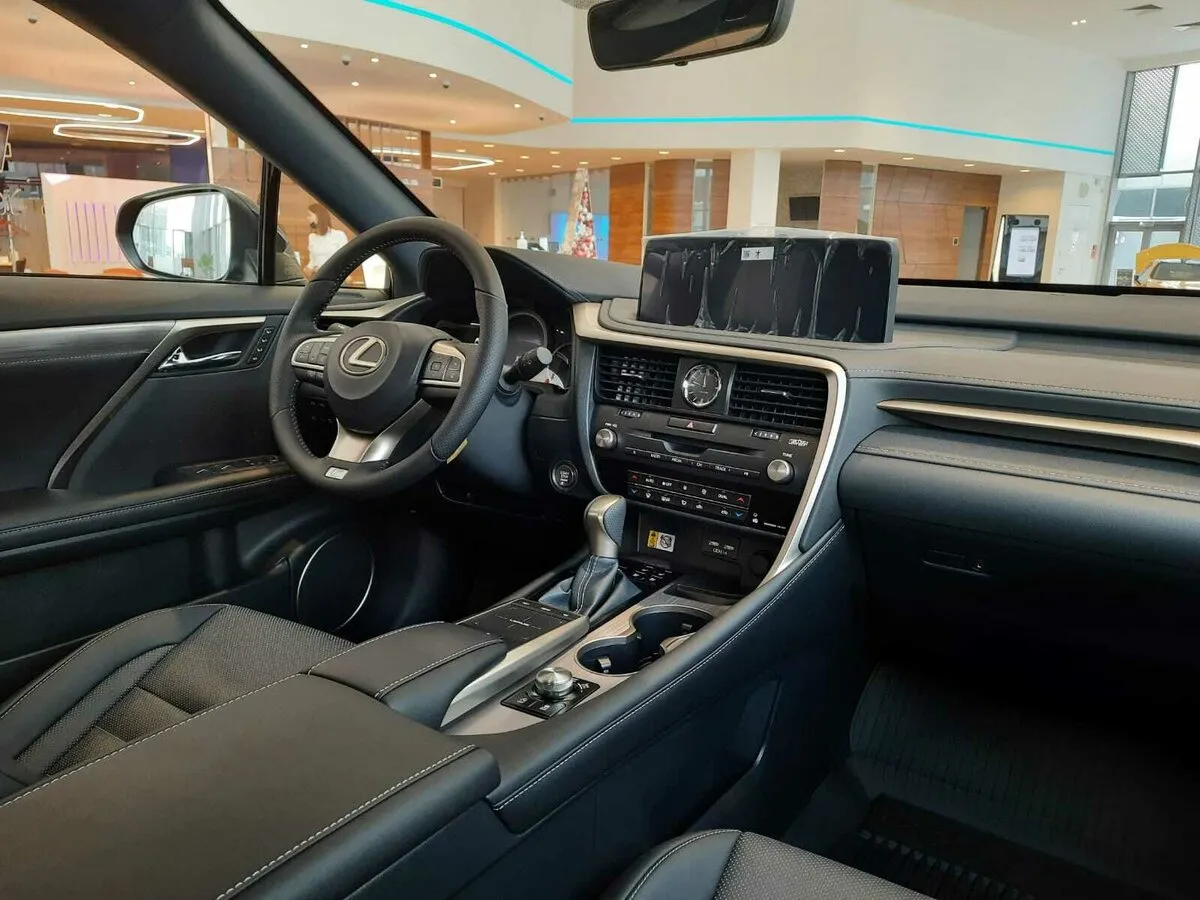
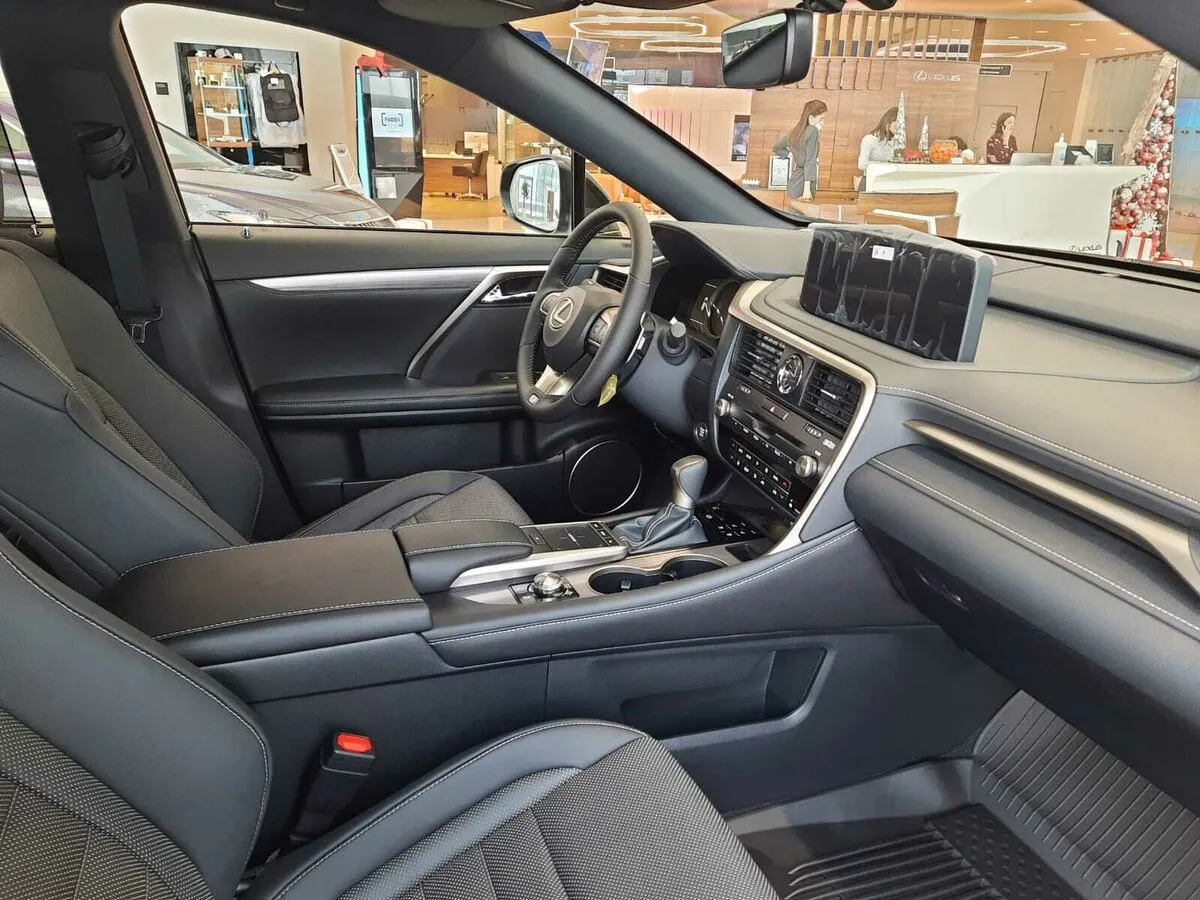
The Lexus RX interior is already among the most premium in the midsize SUV class — the Mark Levinson audio system, the triple-zone climate control, and the 14-inch infotainment screen in 5th gen models set a high baseline. Interior tuning for the RX therefore focuses on enhancing specific elements rather than wholesale transformation.
Wald International and Artisan Spirits both offer carbon fibre interior trim sets for the RX, covering the dashboard inserts, door trim panels, and centre console surround. The dry carbon finish contrasts sharply with the factory wood and aluminium options and immediately elevates the sporting character of the cabin. TRD produces a sports steering wheel in perforated leather that replaces the factory item cleanly and improves grip feel.
Alcantara seat inserts are a popular option, particularly in Japan and GCC, where buyers combine Alcantara with contrast stitching in green or orange. Custom ambient lighting kits are widely available and extremely popular in GCC specification RX models — the ability to run 64-colour ambient lighting is a common client request for Dubai-based builds.
Popular in These Markets
UAE and GCC
The Lexus RX is consistently one of the top five best-selling luxury SUVs in Dubai and across the wider GCC market. In the UAE, the 350h and 500h are the preferred specifications — buyers in this market prioritise both performance and the fuel economy narrative of hybrid powertrains, particularly given local fuel price dynamics. The Wald International Black Bison kit fitted with 21-inch Vossen wheels is the definitive GCC tuning spec, and Hodoor fulfils this exact combination regularly for clients in Dubai, Riyadh, and Doha. The appeal of Lexus in GCC is partly practical: Lexus benefits from lower import tariffs than European brands in several GCC states, and the Japanese reliability record is well-established in a market where workshop availability can be uneven. The hot climate also suits Toyota/Lexus engineering philosophy — Japanese-engineered thermal management is optimised for high ambient temperatures in a way that European alternatives sometimes are not.
Japan
In the domestic Japanese market, TRD and Artisan Spirits are the dominant tuning forces for the RX. The enthusiast build of choice is the RX 500h fitted with TRD suspension, Rowen aero, and Japanese-market 20-inch wheels. Japan has an extremely active domestic tuning culture for Lexus, supported by Toyota's own TRD brand and a dense network of specialist workshops. The 5th generation RX AL30 has seen a rapid uptake in tuning in Japan since its 2022 launch, with Artisan Spirits releasing their Sports Line programme within 12 months of the car's introduction.
Russia and CIS
Prior Design's widebody PD750 kit is particularly popular across Russia, Ukraine, and the wider CIS market for the Lexus RX. The RX 300 2WD is the most commonly-modified variant in this market due to its strong availability and lower entry price point. Parts availability is relatively strong via the official Lexus dealer network that operates across major Russian cities, and the Lexus brand carries significant status in these markets. The Prior Design aesthetic — European, muscular, wide — resonates strongly with tuning preferences in this region.
United States
In the North American market, the Lexus RX is purchased primarily in stock specification, with TRD accessories being the most popular modification category. Cold air intakes from TRD and aftermarket suppliers, 20-inch Vossen VFS-2 wheels, and tinted windows represent the typical California-market build. The RX 350h is the best-selling configuration. More committed tuning builds do exist — particularly on the enthusiast-oriented social media scene — but the US RX owner demographic skews toward comfort-oriented buyers who prefer mild cosmetic upgrades over aggressive transformation.
Frequently Asked Questions
Does fitting a body kit affect the Lexus warranty?
A third-party body kit fitted to the Lexus RX does not affect the powertrain warranty provided the kit installation does not damage or interfere with mechanical components. In practice, this means the engine, transmission, and drivetrain warranty remains intact. However, any damage directly caused by body kit installation — for example, corrosion from improperly sealed panel edges, or electrical issues caused by aftermarket wiring — would not be covered. Modellista factory accessories fitted by authorised Lexus dealers carry full warranty coverage as part of the Toyota/Lexus accessories programme.
What wheel offset works on the Lexus RX without spacers?
For the Lexus RX AL20 and AL30 platforms, an ET35 to ET40 offset in 8.5-inch width and an ET30 to ET35 in 9.0-inch width will typically fit without spacers on standard-width cars. The recommended fitment for a clean flush look on 20-inch is 20x8.5 ET35 with 255/40 R20 tyres. For 21-inch, 21x9.0 ET30 with 245/35 R21 works well. If running a widebody kit such as the Prior Design PD750, offsets can be pushed to ET20–25 on 9.5-inch wide wheels, allowing the wider tyre sizes the flares create room for.
Can the RX 300 be remapped?
Yes. The RX 300's 2.0-litre turbocharged engine responds well to ECU remapping. A Stage 1 remap performed via the OBD port — requiring no hardware modifications — typically delivers an increase from 238hp to approximately 270–275hp, with improved torque delivery across the mid-range and a sharper throttle response. Multiple tuning companies offer Stage 1 maps for the RX 300 platform. For Stage 2 gains (typically 285–300hp), a cold air intake and upgraded intercooler are required to support the additional boost pressure safely. Always use a reputable tuner with a proven RX 300 map — generic maps for this engine can cause long-term issues.
Wald Black Bison vs Artisan Spirits — which offers better quality?
Both Wald International and Artisan Spirits are premium Japanese manufacturers with strong quality reputations, and both produce kits specifically engineered for the Lexus RX platform. The distinction is primarily aesthetic: Wald Black Bison is the more aggressive, theatrical kit — the quad-headlight front bumper and pronounced rear diffuser create a dramatically different visual presence. Artisan Spirits is more architectural and understated — the changes are significant but read as a more evolved version of the factory design. In terms of material quality, panel fit, and surface finish, both are comparable. The choice comes down to the aesthetic statement you want to make. For maximum presence and recognition value, choose Wald. For a premium evolution of the stock design, choose Artisan Spirits.
Body kits, wheels, performance parts and complete build consultation for Lexus RX 300, 350, 450h and 500h. We deliver to 40+ countries including UAE, Japan, UK, Germany, USA, and Russia. Contact us for pricing, availability, and fitment advice.