Aston Martin DBX & DBX707 Tuning Guide 2026 — Body Kits, Wheels & Performance


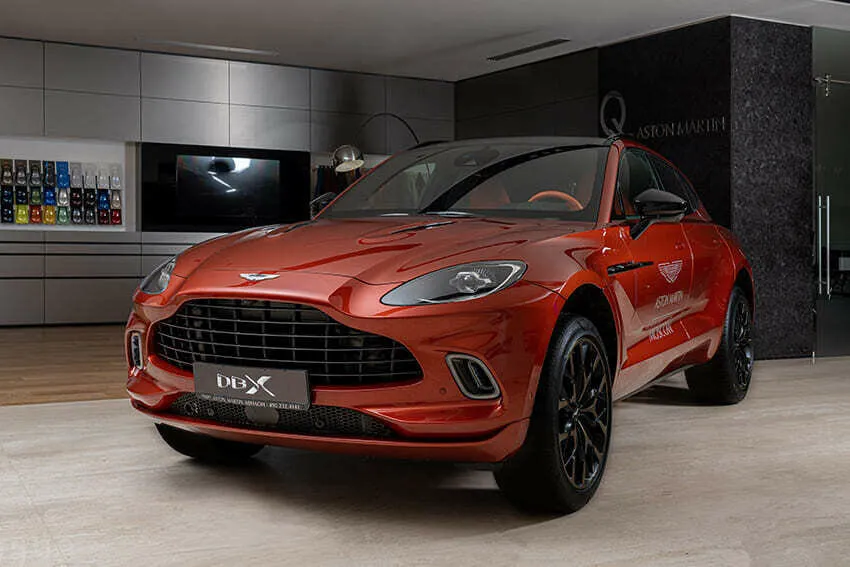
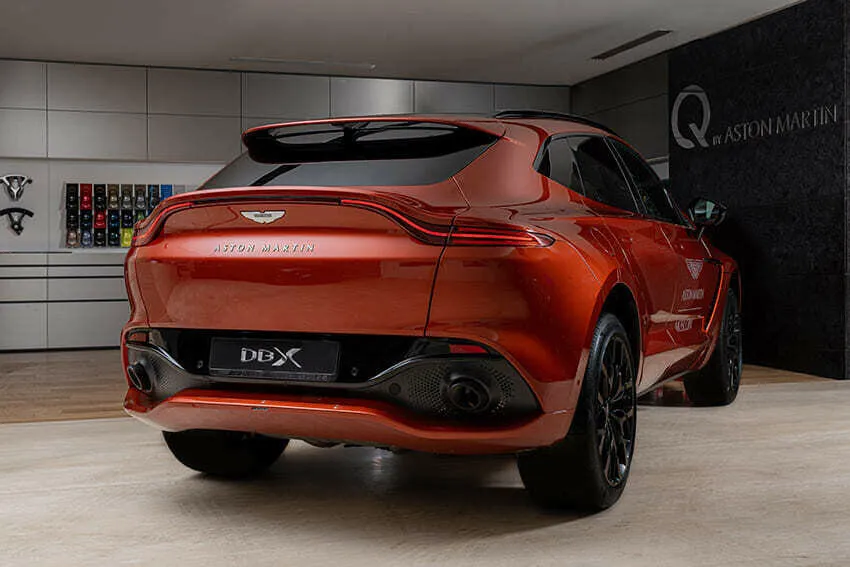
The Aston Martin DBX (2020+) is not just another luxury SUV wearing a storied badge — it is the car that saved Aston Martin. Built on a bespoke bonded-aluminium platform in the purpose-built St Athan facility in Wales, the DBX is powered by a 4.0-litre M177 twin-turbo V8 sourced from Mercedes-AMG, tuned by Aston's own powertrain team to produce 542 hp and 700 Nm in standard trim. The DBX707 variant, launched in 2022, raises output to 697 hp and 900 Nm — making it, at launch, the most powerful luxury SUV in series production. This guide covers every meaningful upgrade available for the DBX and DBX707 — body kits, wheels, performance, interior — and explains what actually works, and why in 2026 a thoughtful owner should think carefully before committing to a full transformation.
Aston Martin DBX & DBX707 — Key Specifications
Body Kits — Real Tuner Programmes
Mansory Cabrera
Mansory is by a distance the most prolific tuner of the Aston Martin DBX. Their flagship programme is the Cabrera widebody conversion — a fully integrated transformation in which every exterior panel is replaced with bespoke forged-carbon components. The front bumper is reshaped with larger intakes and a splitter with active flaps; the bonnet gains pronounced power-domes and heat vents; the fenders are widened by 40 mm front and 55 mm rear with CFRP flares that blend into new carbon side skirts. The rear bumper features a redesigned diffuser accepting Mansory's quad titanium tailpipes, and a roof wing plus ducktail spoiler complete the silhouette. Every Cabrera is hand-built and numbered; most customers pair it with Mansory's YN.5 or M10 forged wheels in 23 or 24 inches. Mansory also offers a slightly more restrained "non-wide" carbon styling package for owners who want the aggression without the fender work.
Startech (Brabus Group)
Startech is the Brabus Automotive group's brand dedicated to British marques — Aston Martin, Bentley, Jaguar, Range Rover — and their DBX programme is the benchmark for OEM-quality tasteful upgrades. The Startech DBX kit consists of a carbon front spoiler with gloss-black mesh inserts, carbon side-skirt blades, wheel-arch extensions in colour-matched paint (not black carbon), a rear diffuser with integrated carbon fins and a discrete boot-lip spoiler. The philosophy is clear: make the DBX look the way Aston would have designed it with a larger budget. Startech also supplies its own ten-spoke forged Monostar wheel in 22 or 23 inch and an Akrapovic-built titanium exhaust system with remote-controlled valves. Fit and finish are essentially indistinguishable from factory — this is the tuner most long-term owners choose.
Renegade Design
Renegade Design, based in Dubai, occupies the middle ground between Mansory's visual extremity and Startech's restraint. Their DBX body kit includes a carbon front bumper add-on with integrated LED accent strips, flared front fenders (pre-cut for 23-inch wheels), carbon side skirts, a full rear bumper replacement with aggressive diffuser, and a two-piece rear spoiler. Each piece is built in dry carbon with a choice of gloss or matte finish. Renegade has strong relationships with the Middle East client base and most of their kits leave the workshop paired with gold or chrome finish wheels and two-tone paint. They also produce a bespoke carbon interior trim set that replaces the factory wood or piano black. The Renegade kit ships as a complete bolt-on solution — no cutting of the aluminium body structure is required.
Lumma Design
Lumma Design of Winterlingen, Germany, offers a deliberately mild aero programme for the DBX aimed at owners who want visible upgrades without widebody surgery. The kit includes a carbon front splitter with side winglets, subtle fender-arch inserts (add-on, not replacement), carbon side skirts, a rear valance insert with a four-fin diffuser, and a small ducktail boot spoiler. Lumma also supplies their CLR GT-R 23-inch forged wheel in brushed titanium or high-gloss black. The entire package bolts onto the factory DBX without touching the bonded-aluminium structure, meaning it can be removed cleanly at any time — a point we will return to in the "Future-Proof" section below.
Write us at [email protected] — we'll put together a full quote within 24 hours including body kit, wheels, exhaust and worldwide shipping.
Wheels
The DBX leaves the factory on 22-inch wheels as standard and 23-inch as an option; the 707 ships on 23s with an optional forged 23-inch set finished in satin black. For aftermarket builds we recommend staying in 22–23 inch territory for ride quality, with 24 inches reserved for static show cars. Our recommended specification for a road-driven DBX is 22x10.0 J ET35 front / 22x11.5 J ET40 rear running 285/40 R22 front and 325/35 R22 rear tyres; for 23-inch builds, 23x10.5 J ET40 front / 23x12.0 J ET45 rear on 285/35 R23 / 325/30 R23. Forged construction is mandatory — the DBX weighs 2,245 kg and cast 23-inch wheels are unsuitable for that load. Our most popular fitments are Vossen Forged S17-01, HRE P101SC and P201, ADV.1 ADV10 M.V2 and the Startech Monostar. All clear the factory 420 mm front / 390 mm rear carbon-ceramic brakes on the 707 without spacers.
Performance — ECU & Exhaust
The M177 V8 in the DBX has exceptional headroom, and in the UK the market for ECU tunes is mature. Mountune and Litchfield Motors (Tewkesbury) are the two best-regarded specialists, both offering dyno-developed calibrations with full warranty backing on the work. For the standard 542 hp DBX, a Stage 1 remap typically delivers 620–640 hp and 850 Nm on stock hardware, with no supporting mods required; 0–100 km/h falls from 4.5 to about 3.9 seconds. For the DBX707, Stage 1 raises output to 760–780 hp and 1,050 Nm — enough to comfortably outrun a standard Urus. Stage 2 adds an Akrapovic or Capristo titanium downpipe section (catless or high-flow-cat) plus upgraded intercoolers, pushing the standard car to around 700 hp and the 707 to 820 hp. Beyond that, turbo upgrades and meth injection are technically possible but venture into specialist territory most owners don't need. On the exhaust side, Akrapovic Evolution titanium, Capristo valvetronic systems, and the Startech/Brabus system all deliver the deep, hard-edged AMG-flavoured V8 note the DBX is famous for, without any drone on motorway cruise.
Interior & Paint Protection
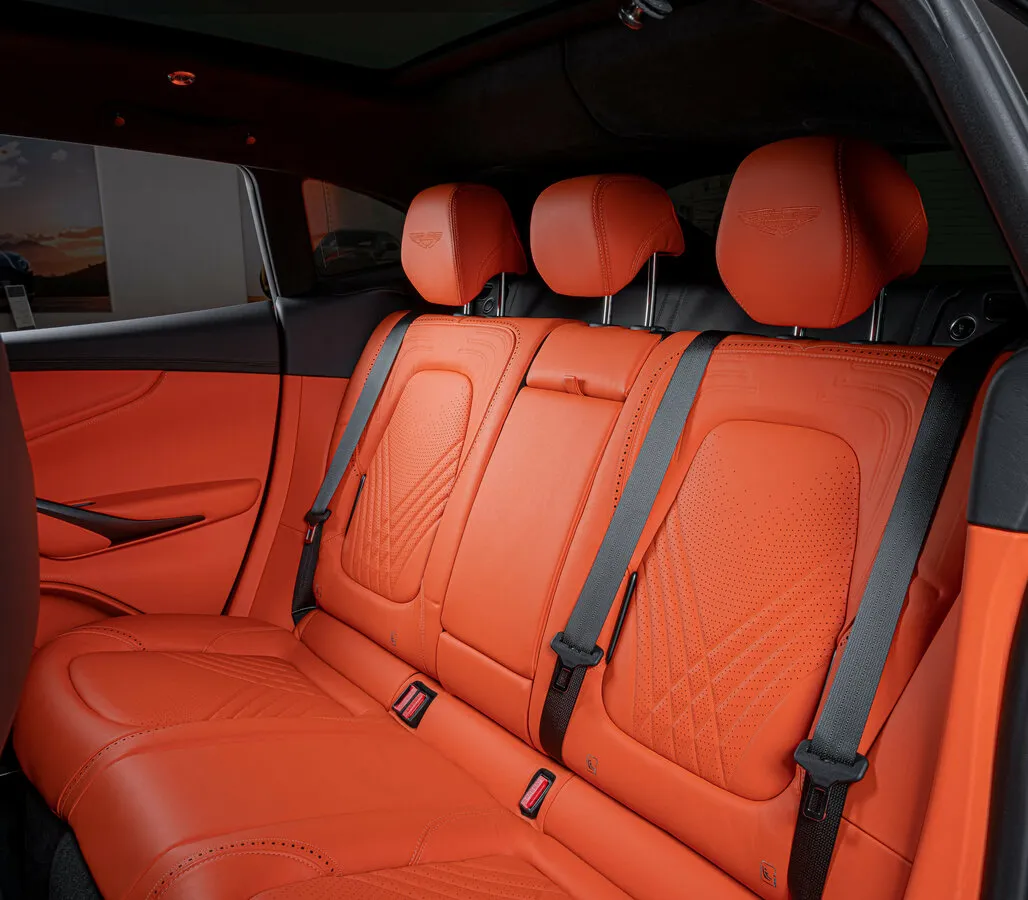
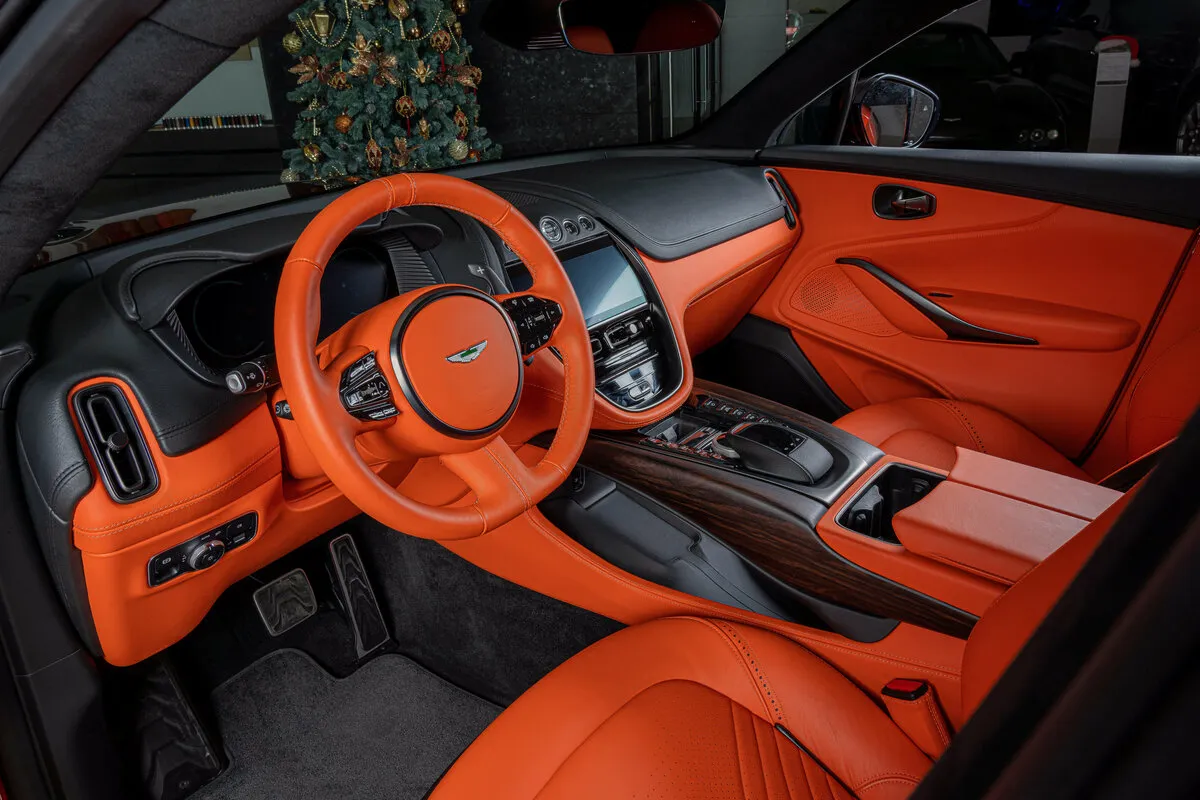
Aston Martin's Q division has already made the DBX cabin essentially customisable from new — bespoke leather, Alcantara, wood, carbon, metal and embroidery options are extensive. Aftermarket interior work therefore focuses on what Q does not do: full aniline leather headliners, one-off veneer work from specialists like Vilner or Carlex Design, and programmable RGB ambient lighting. On the exterior, Topaz Detailing (London) and Auto Finesse handle the paint-protection-film (PPF) and paint-correction workflow that any serious DBX owner should consider before any other modification. A full-body self-healing PPF wrap from XPEL Ultimate Plus or Suntek Ultra protects the original paint — which, as we will argue below, is now a strategic asset.
DBX in 2030 — Future-Proof Modifications (H10)
Here is the argument no Mansory salesperson will make to you. Aston Martin's public roadmap commits the company to a hybrid and electric future: the next generation DBX, expected from 2027, is confirmed as a plug-in hybrid with an electric-only variant to follow. The pure-ICE, naturally-aspirated-feeling 4.0-litre V8 DBX of 2020–2026 is therefore almost certainly the last of its kind — and history is clear on what happens to the final-generation V8s from marques that move to electrification. Look at V12 Vantages, at 458 Speciales, at final-year NA Porsche GT3s: values stabilise and then climb, specifically on low-mileage, original-specification cars.
This has consequences for how you should tune a DBX in 2026. A Mansory Cabrera conversion costs roughly 180,000 euros, involves permanent modification to the body structure in several places, and — critically — locks the car's valuation to Mansory's brand cycle rather than Aston Martin's. A decade from now, a Cabrera-converted DBX will be worth what the market pays for a 2022 Mansory; the original Aston Martin DBX707 underneath becomes invisible. By contrast, a bolt-on Startech or Lumma package, factory wheels stored in climate-controlled storage, original exhaust system retained in its shipping crate, full-body PPF applied on day one — this is the OEM+ approach, and it preserves optionality. If collector values climb, you reverse the modifications and sell a factory-original car. If they do not, you enjoy the modified car exactly as you built it. We recommend every DBX owner in 2026 keep the factory wheels, original exhaust, unmodified bumpers and OEM bonnet in long-term storage. Photograph the car before any work starts. Keep service history digital and original. Future-proofing costs almost nothing today; reversing a welded widebody in 2035 costs a fortune.
Frequently Asked Questions
What is the difference between the DBX and DBX707, and which is the better tuning base?
The DBX707 uses the same M177 V8 block as the standard DBX but with ball-bearing turbochargers, a revised cooling pack, a wet-clutch version of the ZF 9HP transmission and an electronically-controlled limited-slip rear differential. For tuning, the 707 is the superior base: its turbos, clutch and diff already accept the extra torque that Stage 1 and Stage 2 maps produce, so there is more headroom and less supporting work required. If you are buying a DBX specifically to modify, the 707 saves you the cost of upgrading the driveline separately. The standard DBX is still a fine base and tunes cleanly, but above 700 hp it needs clutch and diff upgrades that the 707 already has from the factory.
Will an ECU remap void my Aston Martin warranty?
Yes — any ECU modification detected during a dealer service will void the powertrain warranty on your DBX. Litchfield and Mountune both offer their own warranty cover on engine and driveline components for tuned cars, which for most owners of out-of-warranty cars is an acceptable substitute. If you are still inside the Aston Martin warranty period (3 years factory), we recommend either waiting until expiry or using a switchable calibration that can be returned to the factory map before any scheduled service visit.
How much does a full DBX707 build typically cost?
A Startech-style OEM+ build — carbon aero kit, 23-inch forged wheels, titanium exhaust, Stage 1 tune, full PPF — runs roughly 55,000–75,000 euros plus the car itself. A Mansory Cabrera widebody with 24-inch forged wheels, carbon interior, and performance upgrades typically lands between 180,000 and 240,000 euros depending on spec. Renegade Design and Lumma packages sit between these two extremes, typically 35,000–60,000 euros. Add 8–12 weeks for lead time on any widebody kit, 3–5 weeks for bolt-on programmes.
Do you ship internationally, and what about customs documentation?
Yes — Hodoor ships worldwide from our EU logistics hub. For body kits, wheels and exhausts we handle full export documentation including CMR, commercial invoicing and HS codes. In most destinations, customs duty on automotive aftermarket parts ranges from 3 to 10 percent depending on country and product category. We can quote DAP (duties separate) or DDP (fully landed) pricing at your preference. ECU remaps are delivered remotely via secure bootloader in the vast majority of cases, meaning the car itself does not need to travel.
Email [email protected] with your VIN, current mileage and the spec you have in mind. We reply within 24 hours with a full itemised quote, lead times and shipping options to your country.